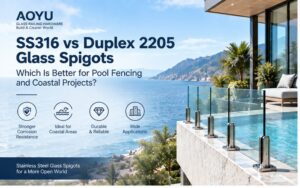


Choosing the right glass spigot for a frameless glass railing requires more than checking appearance or price. The correct model should match the glass thickness, panel size, installation method, base structure, corrosion exposure, and project safety requirements. Buyers should first confirm whether the spigot is designed for 10–12 mm or 8–12 mm tempered glass, then verify the stainless steel grade, anchor system, gasket fit, and recommended panel dimensions. Outdoor, poolside, and coastal projects need extra attention to corrosion resistance, while commercial orders also require consistent dimensions and repeatable installation. The best glass spigot is the one that fits the complete railing system and reduces installation, maintenance, and replacement risk.
1. Start With the Application Scenario
Many frameless glass railing projects use glass spigots to create a clean, open appearance with minimal visible metal. Typical applications include balconies, stair landings, terraces, pool fencing, hotels, residential developments, and commercial buildings.
An indoor staircase has different corrosion and drainage conditions from a swimming pool enclosure or seafront balcony. A common B2B pain point is choosing from photos alone. A product may look correct but still be wrong for the substrate, glass size, or exposure conditions.
Project location and installation structure should therefore be part of the RFQ from the beginning.
2. Confirm the Correct Glass Thickness and Panel Size
Many glass spigot models are designed for tempered glass around 10–12 mm, while some designs can support a broader range such as 8–12 mm.
However, buyers should never assume that every model accepts the same glass thickness.
Check the Approved Glass Range
The gasket and clamping structure must match the actual glass. If the glass is outside the approved range, the panel may not clamp correctly or may require different inserts.
- Grosimea sticlei
- Panel height
- Panel width
- Approximate panel weight
- Number of spigots per panel
- Indoor or outdoor installation
A wider panel can create greater leverage on the fixing points even if its total weight is similar to a narrower panel.
For this reason, panel dimensions are often more useful than a single weight figure.
For B2B projects, ask the supplier to confirm recommended panel dimensions as well as glass thickness.
B2B buyers can also review our guide to sourcing glass hardware from Chinese manufacturers before placing bulk orders.

3. Select the Right Material for the Environment
Material selection directly affects corrosion resistance, maintenance, and long-term appearance.
Robinet pentru sticlă SS304
SS304 is widely used for many indoor and standard architectural applications.
It offers a practical balance of strength, appearance, and cost for residential, hotel, and commercial projects in non-aggressive environments.
Robinet cu racord pentru sticlă SS316
Many buyers prefer an SS316 glass spigot for poolside, humid, and outdoor installations where chloride exposure is higher.
The additional corrosion resistance can be useful where hardware is exposed to moisture, cleaning chemicals, or salt in the air.
Duplex 2205 for Demanding Projects
Duplex 2205 may be considered for more demanding corrosion or strength requirements, especially coastal or marine environments.
The final material choice should follow the project specification and actual exposure.
Buyers should also confirm which components use the specified material. The visible body, screws, and load-related parts may not always use the same grade.
4. Understand Load Capacity Correctly
Load capacity matters, but it should not be treated as one simple number.
- Glass height and width
- Grosimea sticlei
- Spigot spacing
- Number of spigots
- Anchor type
- Substrate strength
- Edge distance
- Installation quality
Ask What the Load Figure Is Based On
Instead of asking only, “How many kilograms can this glass spigot hold?”, ask what glass size, anchor system, base structure, and spacing were used for the stated capacity.
This is especially important for balcony railings, pool fencing, and public areas.
The safer B2B approach is to choose a complete system that matches real installation conditions rather than selecting the highest advertised load rating.
5. Choose the Correct Glass Spigot Installation Method
The two common glass spigot installation approaches are surface-mounted and core-drilled systems.
Surface-Mounted Glass Spigot
A surface-mounted glass spigot uses a base plate fixed to concrete, structural steel, or another approved supporting structure.
It is relatively easy to position, inspect, replace, and maintain, making it common for balconies, terraces, stairs, and pool fencing.
Before drilling, installers should confirm the anchor layout, substrate thickness, waterproofing, and edge distance.
Core-Drilled Glass Spigot
A core-drilled glass spigot is inserted into a prepared hole in the substrate, leaving less visible base hardware.
However, hole position, depth, alignment, fixing material, and drainage should all be confirmed before installation.
For larger projects, installation drawings should be approved before site work begins.
6. Check the Base Structure Before Installation
A strong stainless steel glass spigot cannot compensate for a weak substrate.
Before installation, confirm whether the hardware will be fixed into:
- Reinforced concrete
- Structural steel
- Stone over concrete
- Reinforced timber
- Another engineered structure
Installers should also check waterproofing, embedded services, and drainage before drilling.
Reviewing the fixing base early can prevent rework and unsuitable anchors.
7. Pay Extra Attention to Coastal and Poolside Environments
Coastal and poolside projects expose railing hardware to moisture, chlorides, cleaning chemicals, and salt deposits.
Buyers should review:
- Calitatea oțelului inoxidabil
- Fastener material
- Finisajul suprafeței
- Drainage around the base
- Cleaning schedule
- Chemical exposure
Even high-grade stainless steel requires proper maintenance.
For premium coastal projects, an SS316 glass spigot or Duplex 2205 option may be more appropriate than standard SS304, depending on the specification and exposure level.
For glass spigot for pool fence applications, buyers should pay particular attention to cleaning chemicals, standing water, and the material used for fasteners.

8. Installation Accuracy Affects Appearance and Performance
Frameless glass railings make installation errors easy to see.
If the spigots are not aligned on the same centerline, the glass panels may appear tilted or uneven.
Installers should check:
- Level
- Spigot spacing
- Vertical alignment
- Glass gaps
- Final tightening sequence
For repeated hotel, apartment, or commercial projects, installation templates can improve consistency and reduce labor time.
A small delay on one panel may seem minor, but the same issue repeated across dozens of panels can become a significant project cost.
9. Match the Spigot With the Complete Glass Railing Hardware System
A glass spigot is only one part of a complete frameless glass railing hardware system.
Related products may include a glass railing base shoe, glass clamps, glass standoffs, handrail accessories, top rails, and glass connectors.
Glass Railing Base Shoe
A glass railing base shoe is useful when the project requires continuous channel support instead of point-mounted spigots.
For a direct comparison of these two railing systems, see our glass spigot vs base shoe guide.
This is a good internal-link term for your Base Shoe category.
Glass Standoffs and Glass Clamps
Installers commonly use glass standoffs for side-mounted glass panels, while glass clamps support other railing and architectural glass configurations.
Both are suitable internal-link opportunities to related AOYU product categories.
Handrail Accessories and Glass Connectors
Handrail accessories and glass connectors may be required when the project includes additional support or architectural detailing.
These related product terms also help search engines and AI systems understand that the page belongs to a broader glass railing hardware topic cluster.
10. What B2B Buyers Should Confirm Before Bulk Ordering
Before placing a large order, buyers should confirm:
- Modelul produsului
- Approved glass range
- Recommended panel dimensions
- Material grade
- Finisajul suprafeței
- Anchor pattern
- Gasket thickness
- Installation drawing
- Approved sample
- Packaging method
- Spare-part availability
Buyers should use the approved sample as the reference for bulk production.

Dimensions, surface finish, screws, gaskets, and base geometry should remain consistent between the sample and final order.
For repeat projects, this consistency matters.
A replacement glass spigot that looks similar but uses different anchor spacing or gasket dimensions can create costly site problems.
Concluzie
The best glass spigot for a frameless glass railing is not simply the strongest or most expensive model. It should match the glass thickness, panel size, material requirement, installation method, substrate, and environmental exposure.
For many standard projects, SS304 can be practical. For humid, outdoor, poolside, or coastal applications, SS316 or Duplex 2205 may offer better suitability depending on project requirements.
B2B buyers should focus on system compatibility, clear installation drawings, material consistency, and repeatable installation.
A well-matched glass spigot reduces installation risk, improves project consistency, and makes future maintenance and replacement easier.