

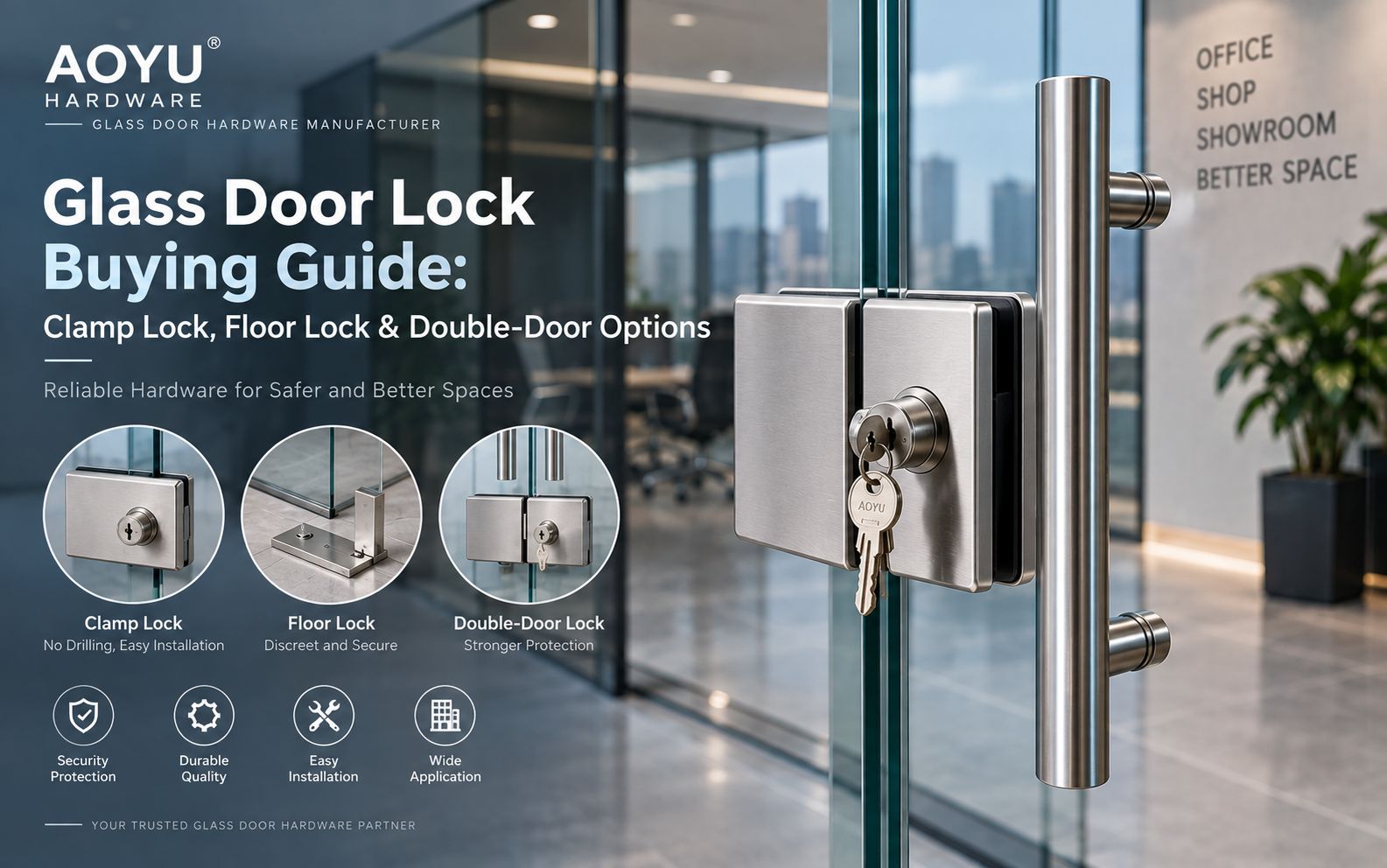
Choosing the right glass door lock starts with the door configuration, not the lock appearance. For frameless office doors and shopfronts, a clamp glass door lock is often the simplest option because many designs can be installed without drilling the glass. Single-leaf doors normally use a single-door lock, while two meeting glass leaves can use a double-door clamp lock to secure both panels more firmly. Floor locks are useful when the locking point should remain low and discreet. Buyers should also decide between mechanical and smart locking. Mechanical clamp locks are usually simpler and more durable. In contrast, password or electronic locks offer easier access management but may require more maintenance. Material, glass thickness, door gap, installation position, and matching hardware should all be confirmed before ordering.
1. Start With the Door Configuration
A common B2B mistake is selecting a lock from a photo before checking whether the project uses a single glass door, a pair of glass doors, or a door closing against a fixed glass panel. These layouts require different strike positions and locking structures. A lock that suits one frameless door may not secure two meeting leaves correctly.
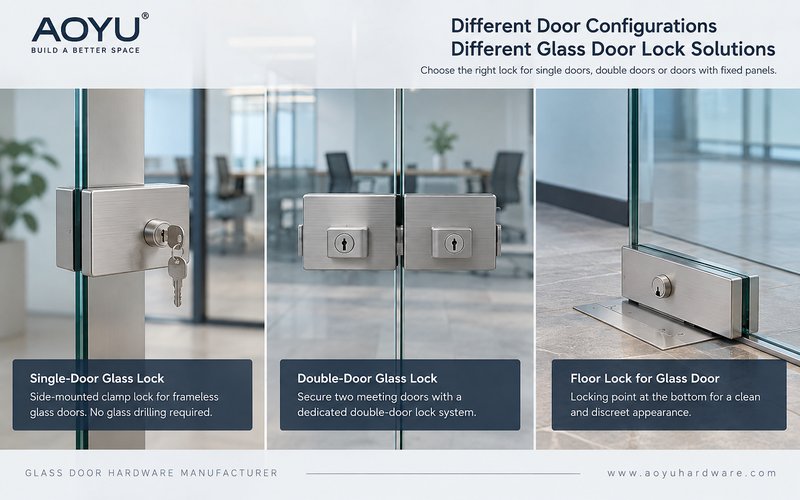
Single-Door Glass Lock
For one frameless glass leaf, a side-mounted clamp lock can close against a wall, frame, or fixed glass panel with the correct keeper. This is common in offices, retail shops, showrooms, and interior partitions. Buyers should provide glass thickness, opening direction, edge gap, and the surface that will receive the strike.
Double-Door Glass Lock
For two glass doors meeting in the center, a double glass door lock is usually better than adapting a single-door lock. Depending on the design, the lock can connect the two leaves or work with a dedicated receiver. A correctly matched system gives the center joint better stability and stronger resistance to forced opening.
2. Clamp Glass Door Locks: Easy Installation Without Glass Drilling
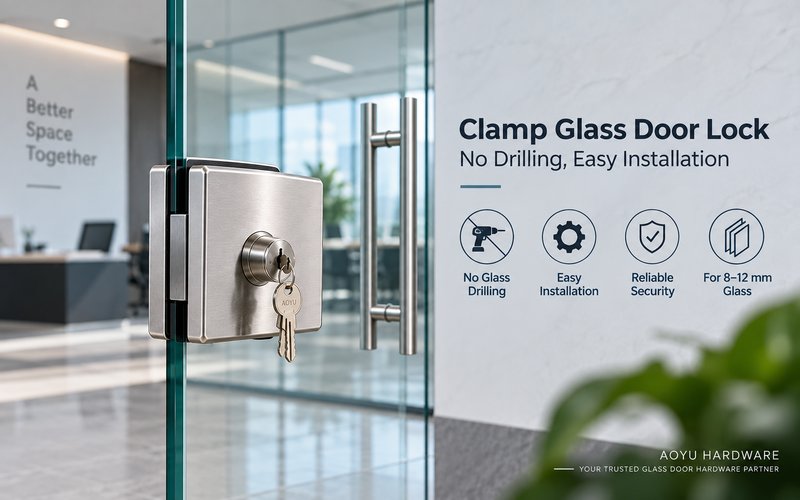
A clamp glass door lock is popular because installation is straightforward. Many models grip the glass with internal pads or gaskets, so tempered glass does not need a lock hole or special cut-out. This is useful for renovations, completed office partitions, and shops where replacing tempered glass would be costly.
No-drill installation also reduces measurement risk. Once manufacturers process tempered glass, installers cannot simply add new holes on site. A clamp design gives installers more flexibility and lowers the chance of replacing a glass panel because the lock cut-out was positioned incorrectly.
Mechanical Clamp Lock vs Smart Password Lock
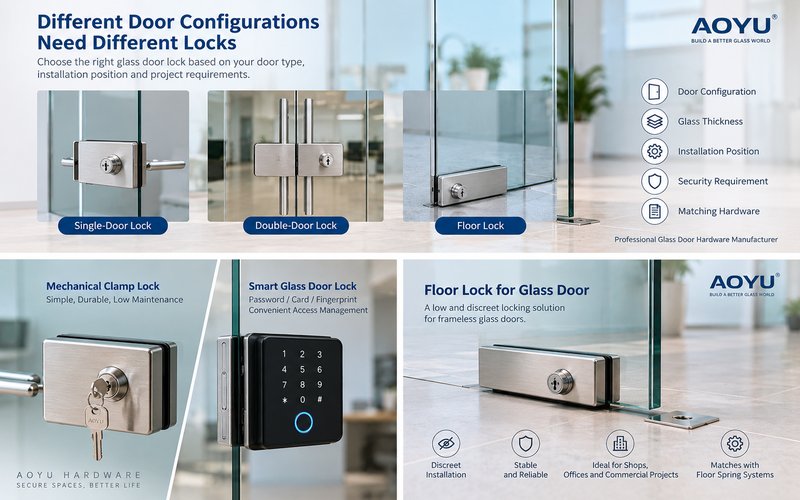
Clamp locks can be divided broadly into mechanical locks and smart password or electronic locks. A mechanical lock uses a conventional cylinder, key, latch, or bolt. It has fewer components and is a strong choice when long service life and simple maintenance matter most.
A smart glass door lock is convenient for offices, meeting rooms, shared workspaces, and retail projects because access can be managed by password, card, or fingerprint depending on the model. However, batteries, boards, sensors, and motors can require more service than a basic mechanical lock. For durability-focused projects, a mechanical clamp lock is often more practical.
3. When Should Buyers Use a Floor Lock for Glass Doors?
A floor lock for glass door applications places the locking point near the bottom of the door. It is useful when buyers want a discreet lock position or when the door layout makes a side clamp lock inconvenient. Floor locks can work well on selected frameless doors in shops, offices, and commercial interiors.
Before ordering, check how the bolt engages with the floor receiver and whether the finished floor can accept the required socket. On marble, tile, or stone floors, installers should confirm the exact position before drilling. If the project also uses a floor spring, coordinate the lock so it does not interfere with the pivot centerline or floor spring cover.
4. Material Choice: SUS304 Stainless Steel or Aluminum Alloy
Material affects corrosion resistance, appearance, weight, and long-term surface quality. Two common options are SUS304 stainless steel and aluminum alloy. For a stainless steel glass door lock, SUS304 is a practical choice for offices, shops, hotels, and many indoor commercial projects because it provides good corrosion resistance and a durable architectural finish.
Aluminum alloy is lighter, and manufacturers can anodize or powder coat it in different colors. It suits projects that need a modern appearance or a coordinated aluminum hardware system. Buyers should confirm both the internal body material and the visible cover material because they are not always the same.
5. Check Glass Thickness, Gaskets, and Clamping Pressure
Even when no glass hole is required, glass thickness still matters. The clamp gap and gasket pack must match the panel. If the glass is thinner than the specified lock range, installers may need extra pads.Incorrect gasket thickness can allow movement or create excessive local pressure on the glass edge.
For B2B orders, send the actual glass thickness rather than writing only “standard tempered glass.” If a project includes several doors, list each thickness separately. The supplier can then confirm the clamp range, gasket quantity, and screw length before packing.
6. Security Depends on the Complete Door System
A strong glass door lock still depends on the receiver, fixing method, door alignment, and surrounding hardware. For double doors, the two leaves need a consistent center gap so the lock and keeper engage smoothly. If the doors move out of alignment, the lock may become difficult to close even when the cylinder is working correctly.
For higher-security projects, ask about bolt engagement, cylinder quality, keeper construction, and whether the lock operates from one or both sides. Buyers should select the lock as part of the complete door system rather than as an isolated accessory.
7. Coordinate the Lock With Other Glass Door Hardware
A frameless glass door system may also include a pivot de podea, top montarea plăcii de etanșare, bottom patch fitting, glass door handle, glass door connector, pivot fitting, and door stop. These are useful related product terms for internal linking because the glass door lock must work with the complete layout.
For example, a commercial door using a floor spring and patch fittings needs enough clearance for the lock, handle, and opening path. Confirm the hardware schedule before mass production so components do not compete for the same glass edge or floor position.
8. Common B2B Buying Problems to Avoid
One common problem is buying the right style but the wrong door version. A single-door lock cannot always be converted into a double-door lock on site. Another issue is ordering a smart lock without confirming power, battery access, door handing, or emergency unlocking. Buyers also sometimes focus on the visible finish while ignoring gasket quality, the internal mechanism, cylinder, or screws.
For repeat orders, keep an approved sample and record the model, material, finish, glass thickness range, keeper type, and opening direction. This helps distributors and contractors maintain consistency when replacing locks or ordering another project phase.
9. B2B Pre-Order Checklist
Door and Installation Information
Before ordering, confirm whether the project is single-door or double-door, the glass thickness, door gap, opening direction, lock height or floor position, and whether glass drilling is allowed. For a clamp lock, verify the clamp range and gasket combination. For a floor lock, confirm the floor receiver position and finished-floor material.
Lock and Material Information
Specify mechanical or smart operation, key or access method, SUS304 stainless steel or aluminum alloy, surface finish, indoor or exposed environment, and the required security level. If the project uses other frameless feronerie pentru uși din sticlă, send the hardware schedule or drawing so the supplier can check compatibility.
For larger projects, buyers should also evaluate the production capability and quality control of their glass hardware manufacturer before placing bulk orders.
10. Which Glass Door Lock Should You Choose?
Choose a clamp glass door lock when the customer wants simple installation, no glass drilling, and a practical solution for offices, shops, and frameless interior doors. Use a double-door clamp lock when two glass leaves meet in the center and need to be secured together. Choose a floor lock when a low, discreet locking point better suits the architectural layout.
For access convenience, a smart lock can add password or electronic control, but projects that prioritize simple maintenance and long service life often favor a mechanical lock. In either case, the best glass door lock is the one that matches the door configuration, glass thickness, material requirement, security level, and the rest of the glass door hardware system. Confirm these points before production to reduce installation changes, replacement costs, and on-site delays.